
QUESTION
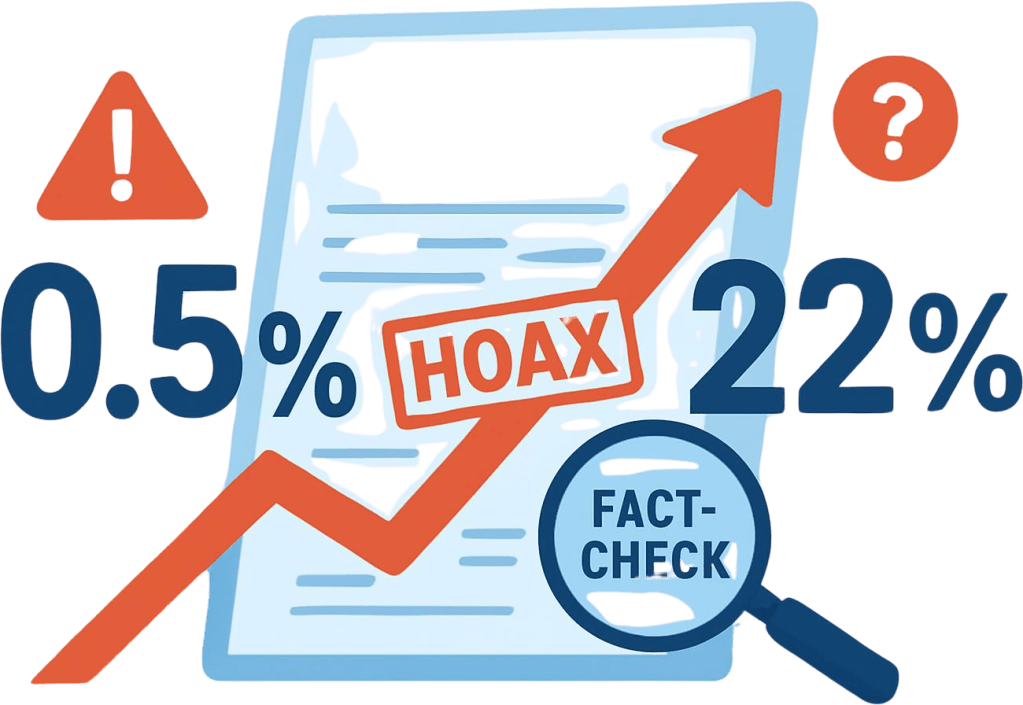
“I recently saw news on social media claiming that after Government Regulation No. 20 of 2026 was issued, SME taxes increased from 0.5% to 22%. Many influencers are saying that this new regulation will heavily burden small businesses. Is it true that SME taxes are now 22%? If so, how is it calculated? How the SMEs tax increased that much?”
SHORT ANSWER
=NO, that is NOT TRUE.
SME taxes did not suddenly increase from 0.5% to 22% as a result of Government Regulation No. 20 of 2026 concerning Amendments to Government Regulation No. 55 of 2022 on Adjustments to Income Tax Regulations (“GR 20/2026”)1. In reality:
1. The 0.5% Final Income Tax (Final PPh) rate for SMEs has been in effect since 2018 under Government Regulation No. 23 of 2018, and it continues to exist under GR 20/2026.
2. The 22% Corporate Income Tax (CIT) rate2 has already been in effect since 2020. Therefore, GR 20/2026 did not create or increase a new tax rate to 22%.
This is where many misunderstandings arise. Various forms of misinformation, clickbait content, and sensational reporting have created the impression that tax rates have increased from 0.5% to 22%, whereas:
– The 0.5% tax rate is calculated based on gross turnover (revenue); and
– The 22% Corporate Income Tax rate is calculated based on taxable profit (net income).
As a result, many people compare two completely different tax bases and incorrectly conclude that SME taxes have increased dozens of times. In practice, this is not the case.
Why Are People Saying SME Taxes Have Increased to 22%?
Recently, numerous short videos and social media posts have claimed:
“SMEs can no longer use the 0.5% tax scheme and must now pay 22% tax”
This statement is entirely inaccurate.
What actually happens is that certain SME taxpayers may eventually exit the 0.5% Final Income Tax regime after their eligibility period expires. Once the facility ends, they return to the normal tax regime applicable to corporate taxpayers in general.
However, this is not a new rule introduced in 2026. The mechanism has existed since 2020 under the Income Tax Law and was intentionally designed as a transition pathway to encourage SMEs to adopt proper bookkeeping and accounting systems as they grow.
Why Was the 0.5% SME Tax Incentive Introduced?
Section 2 of Government Regulation 23/2018 provides that taxpayers with annual gross turnover not exceeding IDR 4.8 billion may utilize the 0.5% Final Income Tax facility.
The ground behind this incentive is straightforward: The government recognizes that many SMEs do not yet have sophisticated accounting systems.
If newly established small businesses were immediately required to prepare complete financial statements, calculate taxable profits, fiscal adjustments, depreciation, amortization, and other tax compliance requirements, the administrative burden would be extremely high. Therefore, the 0.5% Final Income Tax regime was introduced to:
– Simplify tax administration;
– Improve tax compliance;
– Encourage business growth during the early stages of development.
Important Changes Introduced by GR 20/2026
Under the previous regulation (GR 55/2022), the use of the 0.5% tax facility was limited by:
1. Eligibility period; and
2. A turnover threshold.
Under Section 59 (1) GR 55/2022, the facility could be used for:
– 7 years for Individual Taxpayers;
– 4 years for CV, Partnerships / Firm (Firma), Cooperatives, Village-Owned Enterprises (BUMDes), and Individual Limited Liability Companies (PT Perorangan);
– 3 years for Limited Liability Companies (PT).
In addition, annual turnover could not exceed IDR 4.8 billion.
Then, GR 20/2026 introduced significant changes. Under the new rules:
1. Limited Liability Companies (PT), Firm / Partnerships, and CV are no longer eligible to use the 0.5% Final Income Tax regime.
2. The facility is now limited to:
– Individual Taxpayers;
– Koperasi;
– Individual Limited Liability Companies (PT Perorangan).
Important note: for these eligible taxpayers, the 0.5% rate is no longer subject to a time limitation and may be used indefinitely, provided annual turnover remains below IDR 4.8 billion.
0.5% Tax vs. 22% Corporate Income Tax
This is the part most frequently misunderstood. Many people focus solely on the percentages, 0.5% and 22%, without understanding that the taxes are imposed on entirely different bases.
Take example of 0.5% Final Income Tax, assuming:
– Annual turnover: IDR 2,000,000,000
– Calculation: 0.5% × IDR 2,000,000,000
– Total tax = IDR 10,000,000
This tax remains payable even if:
– Business generate no-profit; or
– The business operates at a loss.
Why? Because the tax is imposed on gross revenue, not profit.
Potential Advantages of the 22% Corporate Income Tax Regime
Without the 0.5% facility, a business becomes subject to the general Corporate Income Tax provisions under Section 17(1)(b) of the Income Tax Law. The applicable rate is: 22% of Taxable Income (Net Profit). Again, this is not a new rule. It has applied since the 2020 tax year.
Take example:
– Annual turnover: IDR 2,000,000,000
– Taxable income (12%): IDR 240,000,000
– 50% (incentives for SME) × 22% × IDR 240,000,000
– Corporate Income Tax payable = IDR 26,400,000
In this example, the tax burden is indeed higher than under the 0.5% final tax regime. However, this is not always the case.
When a Business Operates at a Loss
One critical point often shows up from social media discussions is that a company subject to the 22% Corporate Income Tax regime may owe zero income tax if it does not generate taxable profit. Consider the following example:
– Initial capital investment: IDR 1,000,000,000
– Annual operating expenses: IDR 100,000,000
– Weak national economic conditions reduce sales performance
– Annual revenue: IDR 250,000,000
If we use the tax rate under the 0.5% Final Income Tax regime:
– Tax = 0.5% × IDR 250,000,000
– Tax payable = IDR 1,250,000
This tax remains payable despite the business operating at a loss.
However, under the 22% Corporate Income Tax regime:
– The company records a fiscal loss.
– Taxable income = zero.
– Income tax payable = IDR 0
In other words, the company does not pay any income tax because there is no taxable profit. This can be continued again and again for several years, and after the business generates a profit.
This important distinction is frequently overlooked in online discussions.
Can Newly Established SMEs Pay No Income Tax at All?
Yes, this is entirely possible under the Corporate Income Tax regime. Many startups and newly established SMEs spend several years in investment and expansion phases. During these stages:
– Operating costs are often higher than revenues;
– Market development expenses are substantial;
– Businesses may not yet be profitable.
As a result, fiscal losses may arise. As long as there is no taxable profit, Corporate Income Tax can be zero.
In addition, tax losses may generally be carried forward to future tax years in accordance with applicable tax regulations.
Why the Narrative “SME Taxes Increased from 0.5% to 22%” Is Misleading
The claim is misleading because it compares two completely different tax bases. It is essentially comparing:
– 0.5% of gross turnover, versus
– 22% of net taxable profit.
Turnover and profit are fundamentally different concepts.
Profit represents the amount remaining after deducting operating expenses, cost of goods sold, depreciation, and other allowable deductions. Therefore, the 22% Corporate Income Tax rate cannot be directly compared with the 0.5% Final Income Tax rate. Doing so creates a false impression that taxes have increased dramatically, when in reality the tax calculation methods are entirely different.
CONCLUSION
The claim that SME taxes increased from 0.5% to 22% following the issuance of GR 20/2026 is misleading and fails to accurately explain Indonesia’s tax system. The 0.5% Final Income Tax and the 22% Corporate Income Tax are imposed on different tax bases:
– The 0.5% Final Income Tax is calculated from gross turnover.
– The 22% Corporate Income Tax is calculated from taxable profit.
Furthermore, the 22% Corporate Income Tax rate is not a new tax introduced in 2026. It has already been in effect since 2020.
In many situations, businesses operating at a loss may not pay any Corporate Income Tax at all because they have no taxable income. For this reason, SME owners should understand the crucial distinction between turnover and profit before relying on clickbait content or sensational claims suggesting that taxes have increased dramatically.
- Government Regulation = Peraturan Pemerintah ↩︎
- Corporate Income Tax (CIT) = Pajak Penghasilan (PPh) Badan ↩︎


Leave a Reply